unpicking the bind off from a pair of socks because they were too short on the leg and fell off too easily. I will give it another inch or two and then hopefully they will be good bed socks
5 Likes
I like the yellow yam a lot! I love a variegated yarn that makes tiny stripes like that.
I do the entire leg in ribbing, so those suckers stay on.
They were literally 1 cm of ribbing after the heel flap. Now it’s probably an inch.
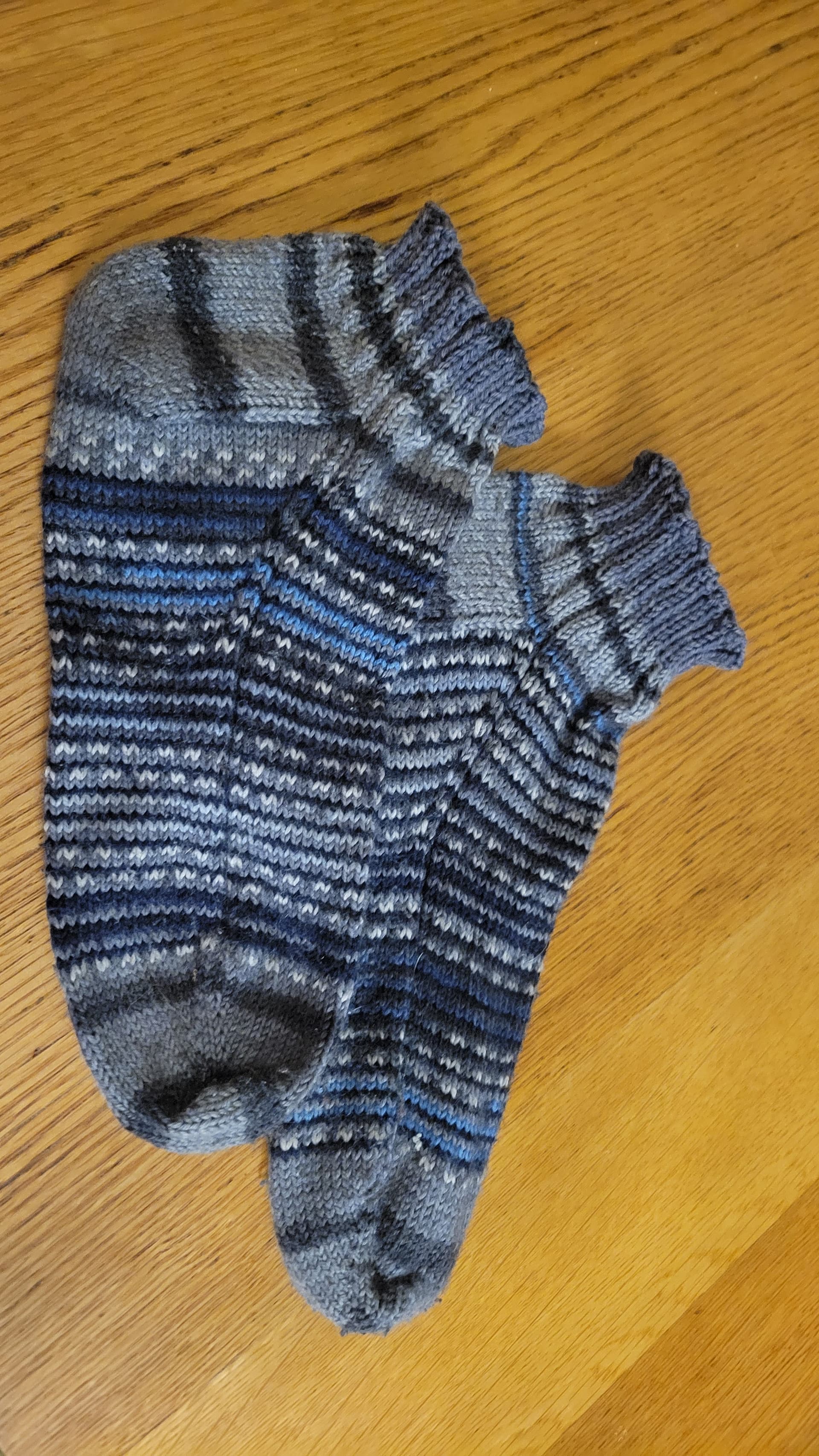
The last stripe is all new, plus the original were a bit shorter than implied because of the bindoff
the yellow yarn from the last socks was https://rosehillyarns.com/
Brenda Dane did a big segment on shorty socks a while back! She said she finally found a pattern that worked for her.
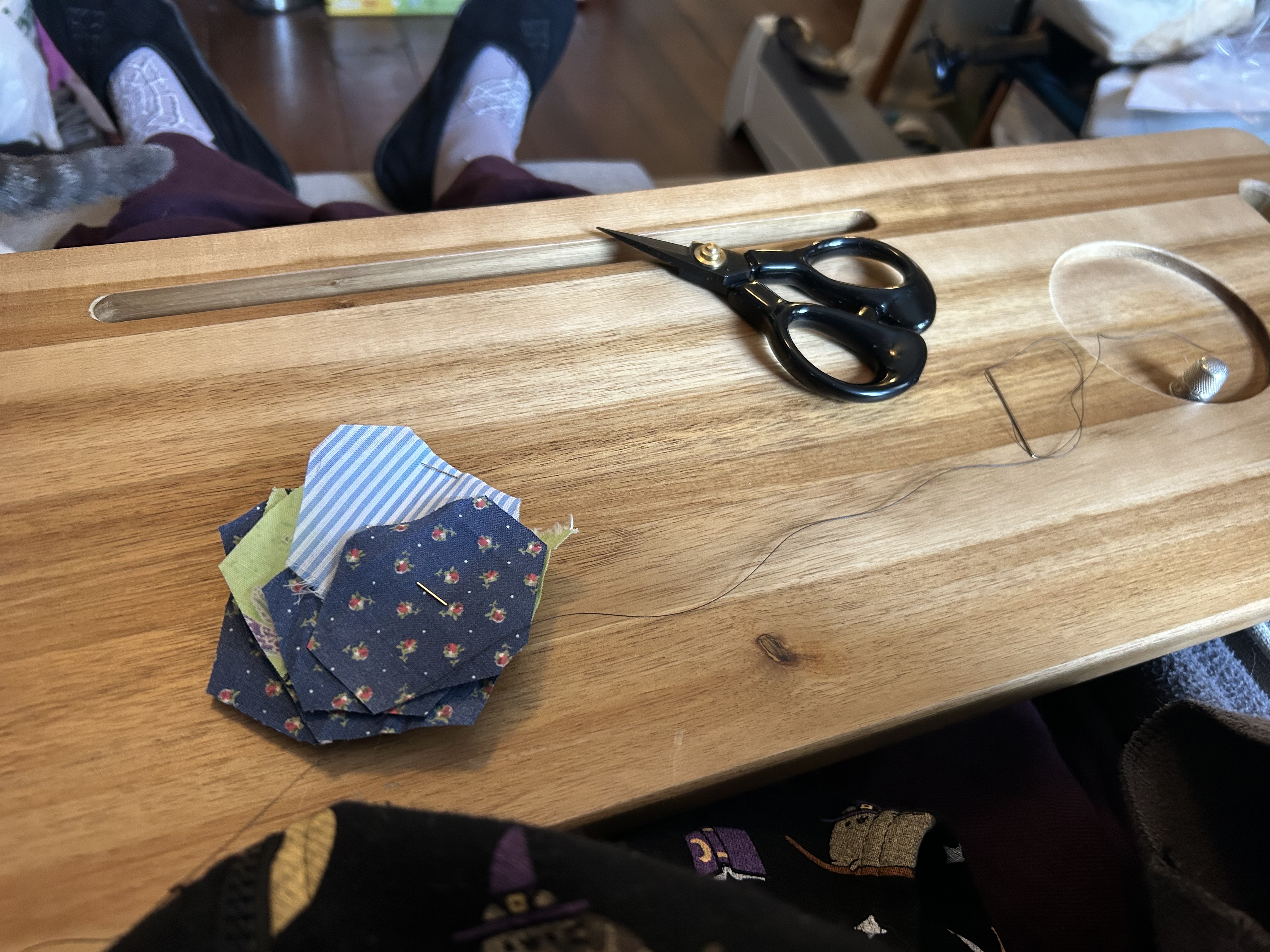
This thread has been quiet for a while but I am pleased with my setup for some English paper piecing in my recliner.
7 Likes
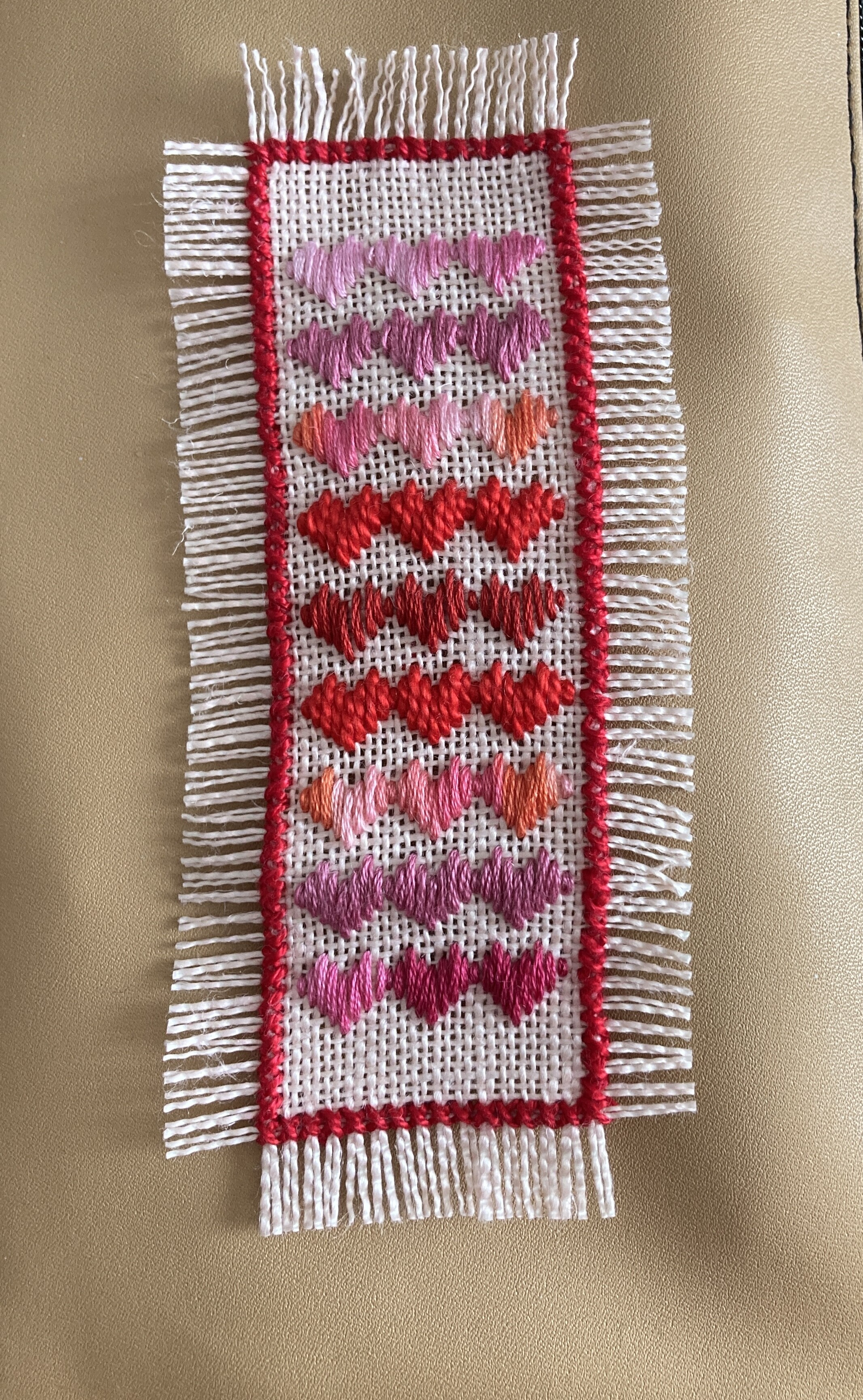
I am working on a sleeve for a sweater I didn’t swatch for using a yarn I’ve never worked with before that has a reputation for behaving very differently once washed.
I’m not quite sure what I was thinking, but I keep going.
9 Likes
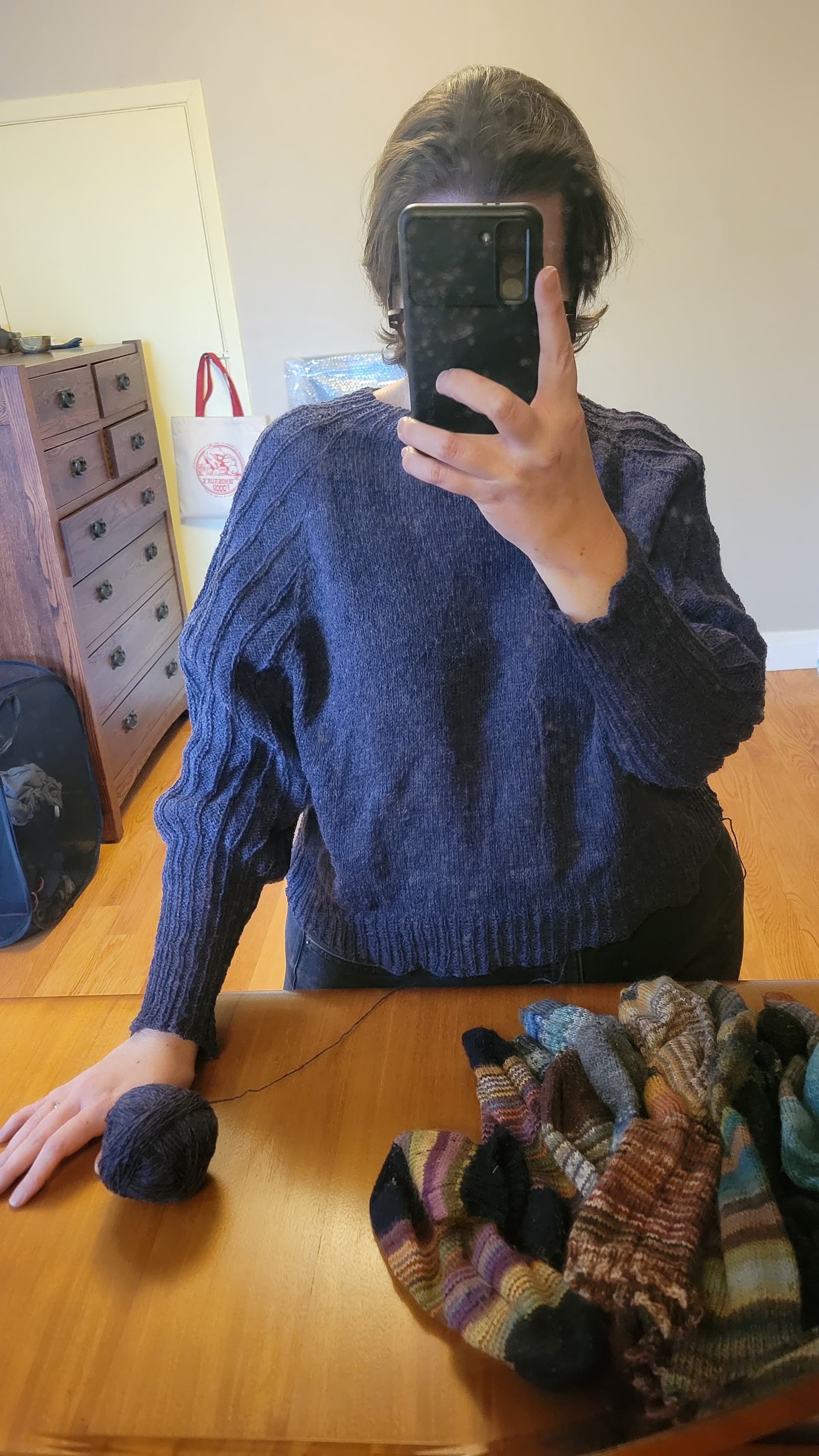
Turned out better than I had any right to expect. Perhaps a bit more transparent than I hoped - people always talk about how this yarn blooms on washing, and I seem to have formed unreasonable expectations
13 Likes
Such a cool sleeve! (And sweater!)
3 Likes
Sock
I am getting towards the end of my random self striping yarns, and reaching the sweater colourwork quantities
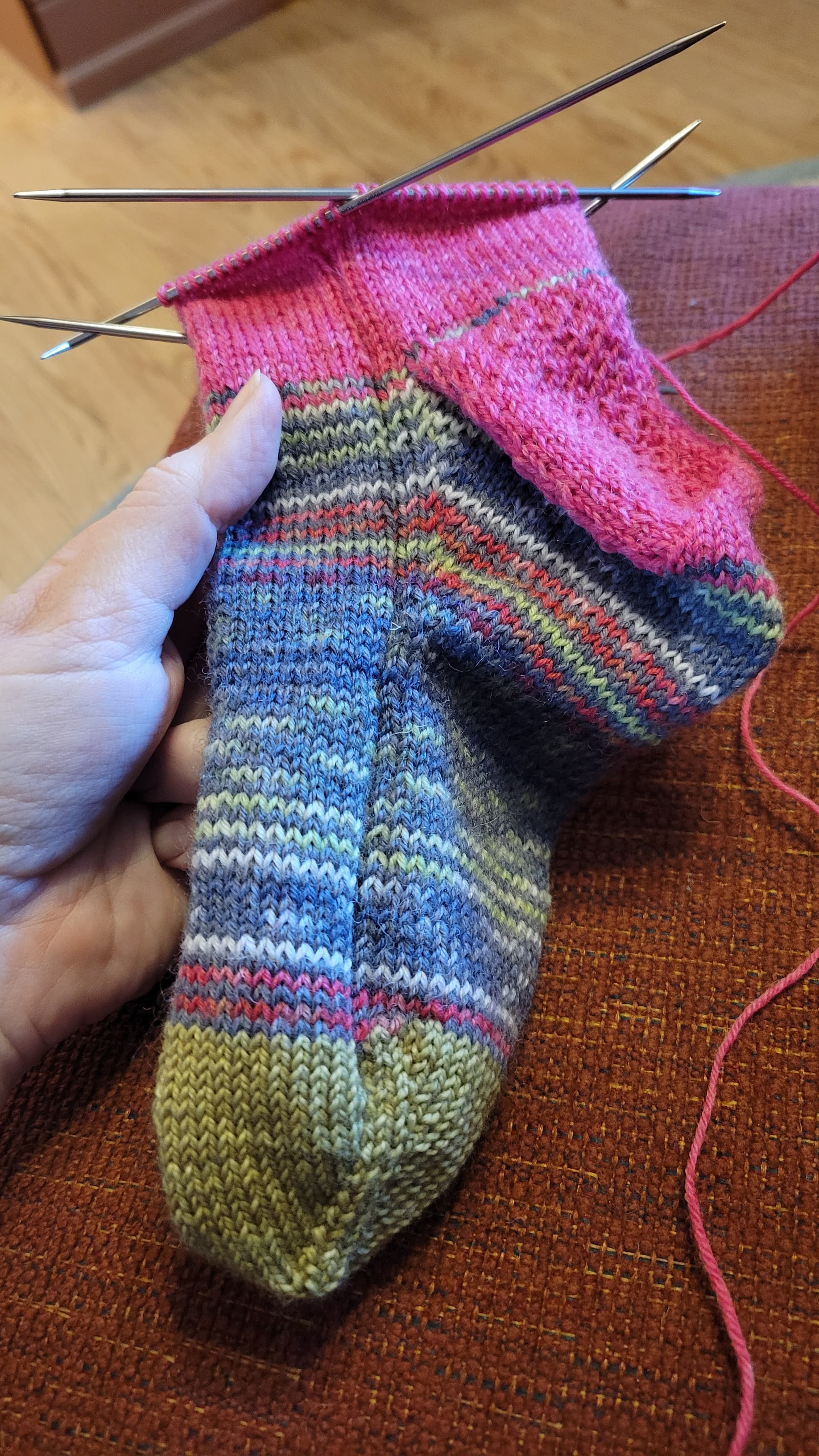
this grey & pink yarn was a freebie. It’s a good German sock yarn, but it does not play easily with other colours of yarn I have
10 Likes
I have found the grey sweater again.
I put it back into a project bag with this much of the bindoff left to do (losing at yarn chicken)
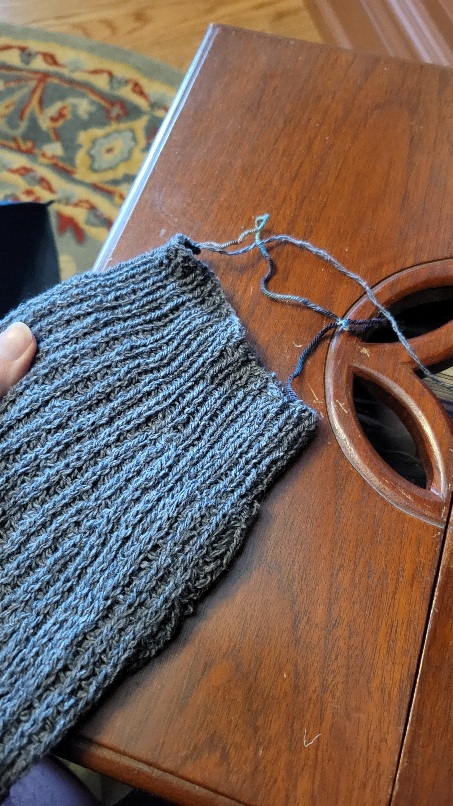
So I need to decide whether to take back a row and redo the bindoff, or add a little bit of extra yarn and weave in more ends
I lie. Bigger issue is that i started to bind off and that sleeve is much shorter than the other
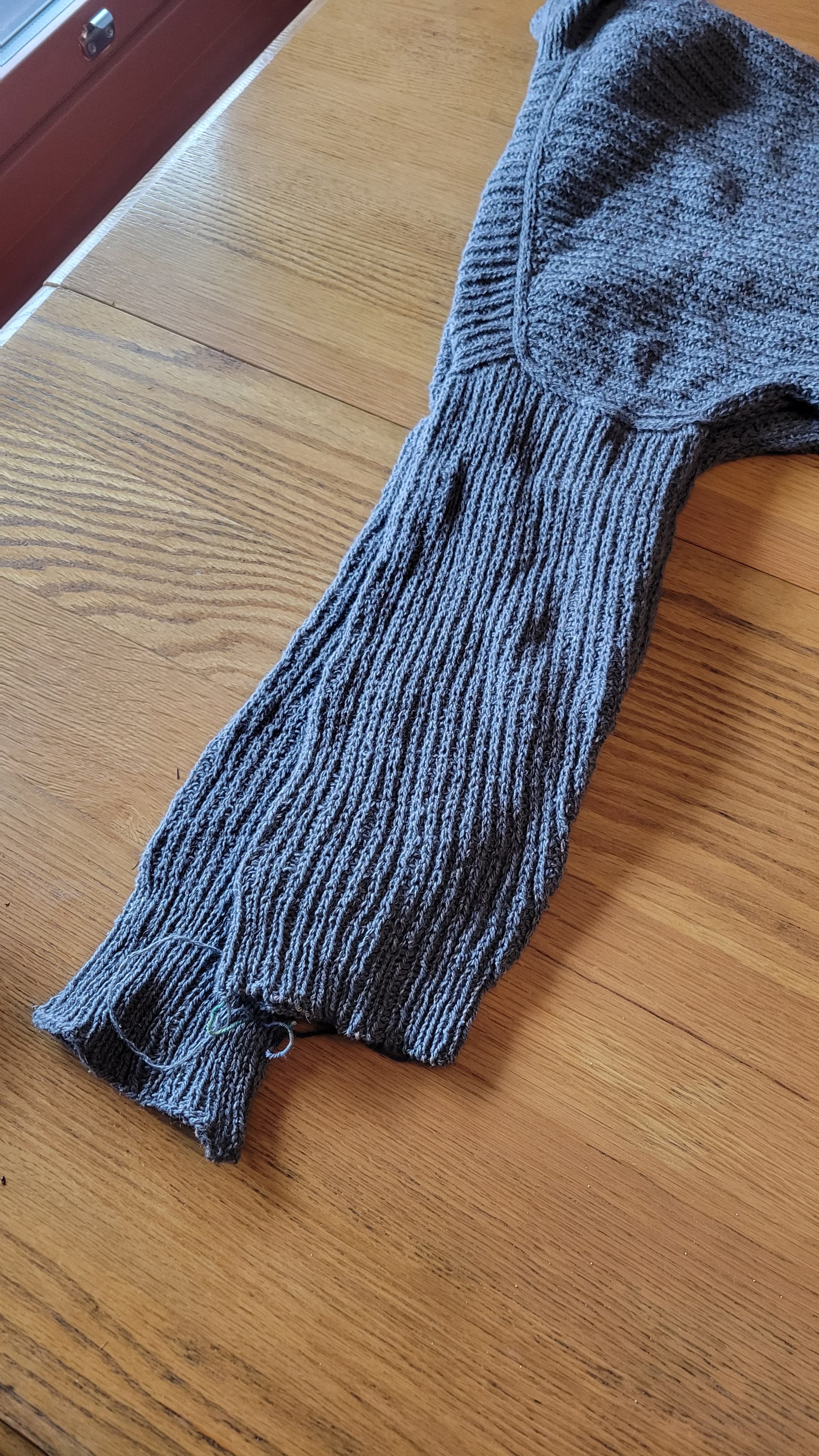
wth happened there?
6 Likes
it appears that I had completely lost at yarn chicken, and the two balls of grey yarn that were with this sweater aren’t actually the same yarn as I knit the sweater with. So I need to rip back half of the difference on the longer sleeve and bind off both again.
5 Likes
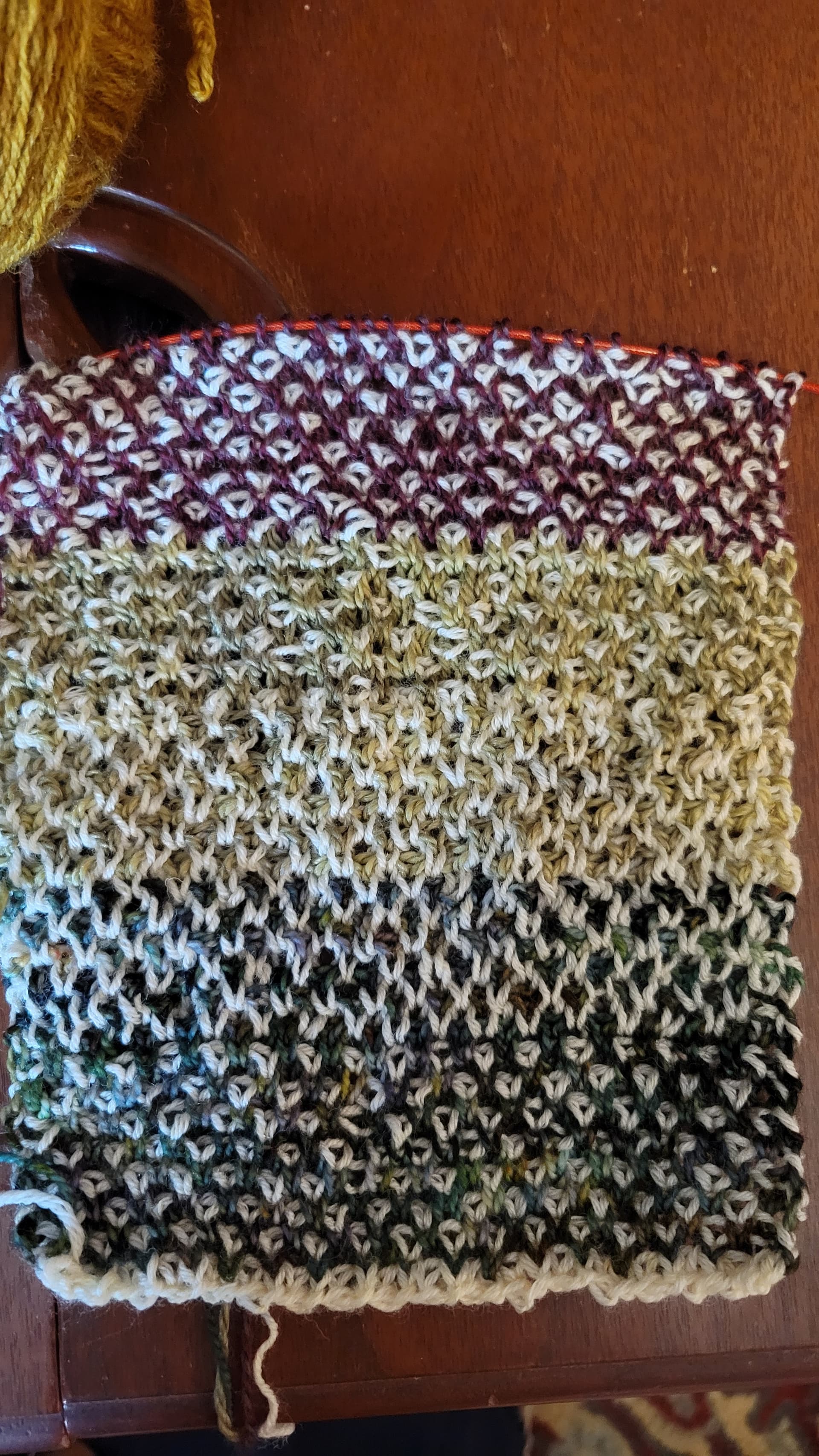
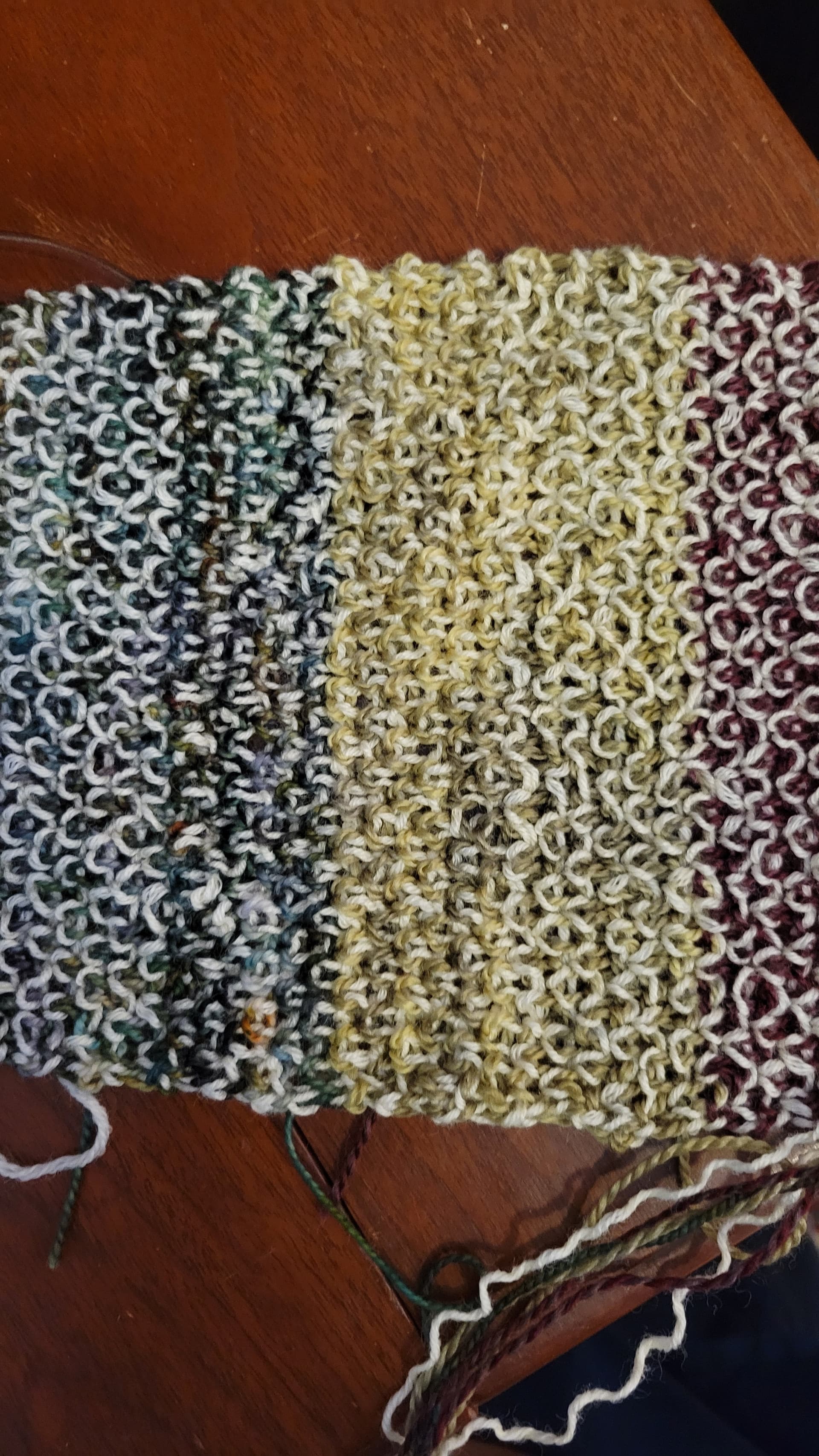
Swatches for a vest.
I think the dark green contrast wrong side (wrong side is the top swatch, bottom level is white MC, 2nd level is green MC)
I didn’t plan on making a traffic light swatch
6 Likes
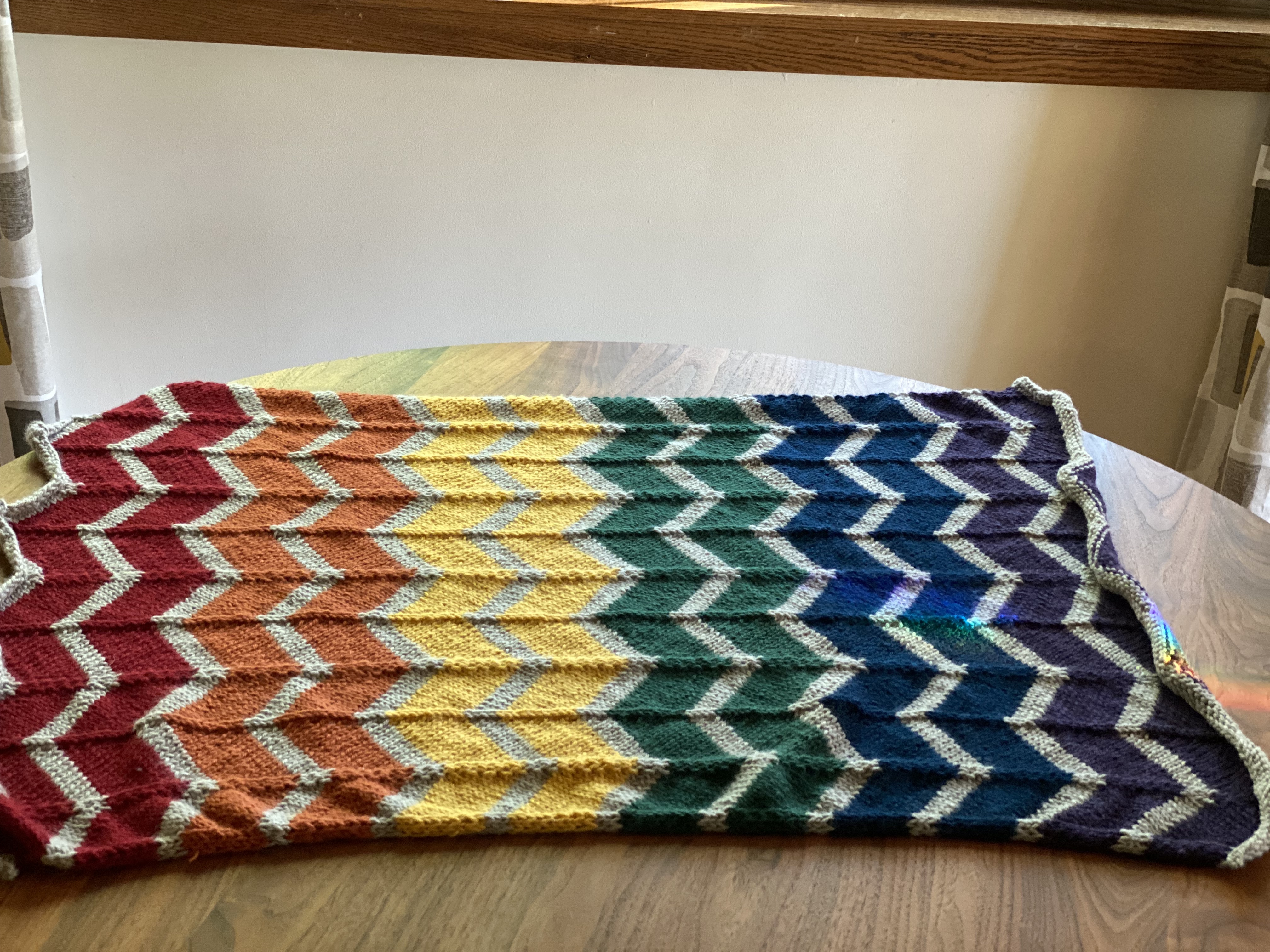
Baby blanket for my coworker. Darby, the baby is now six months old
 I was totally on track to have it done for his birth but then I found a huge mistake and ended up restarting and then put it aside for months because I was so mad about the mistake.
It’s finished except for blocking. I know I should block it to make the points on the edge stand out but I really just want to give it to my coworker tomorrow and be done with it. @plainjane thoughts? If you tell me I should block it, I will.
13 Likes
give them the blanket tomorrow 
4 Likes
Give them the blanket. If you really want the points to stand out really well, block just the edges, but it’s beauuuutiful and they will love it either way.
1 Like
Question for knitters: I’m making this cardigan in the second-largest size. I’m working on the left-front panel, and I can’t decide how I’m supposed to be doing the decrease.
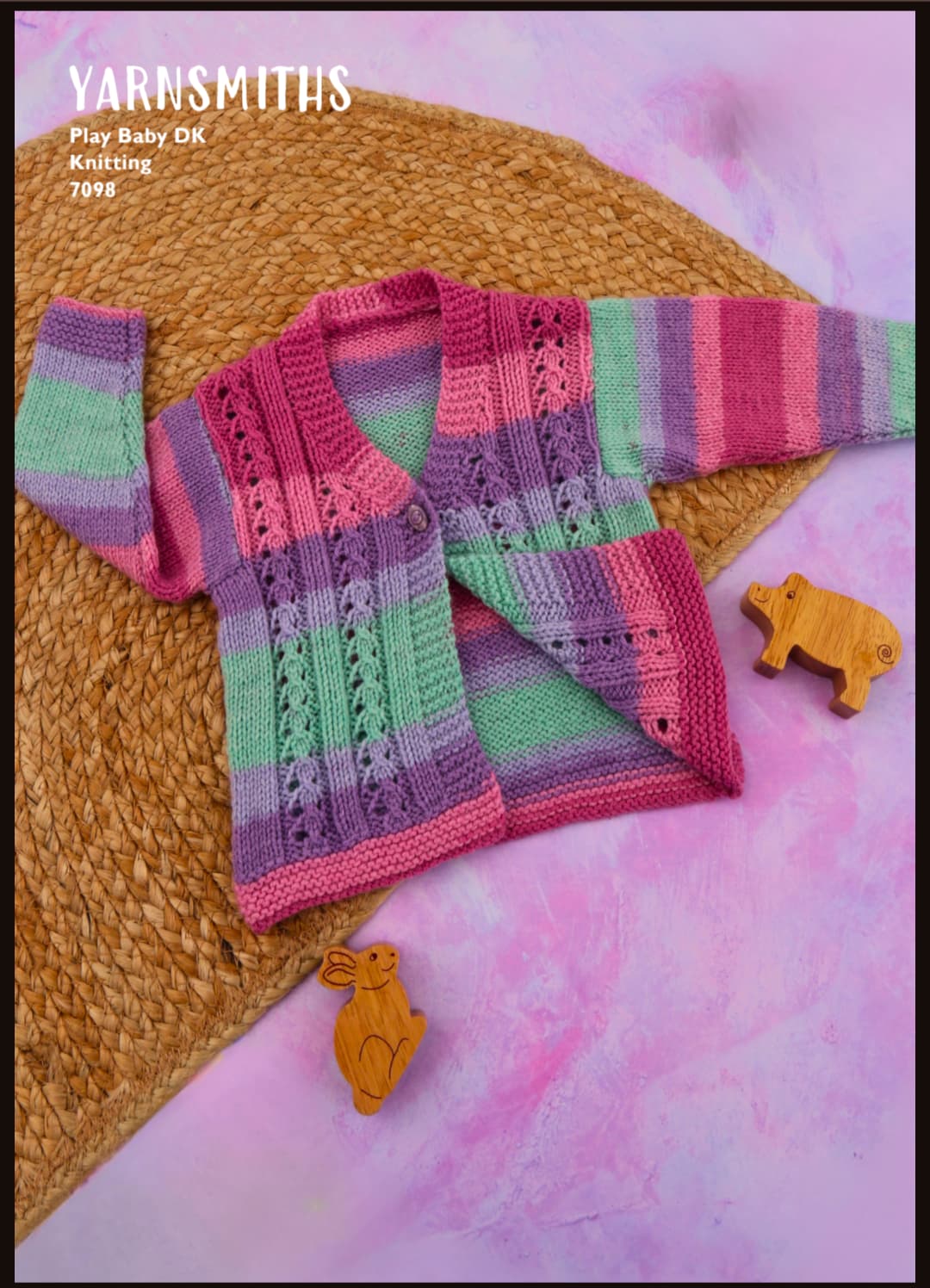
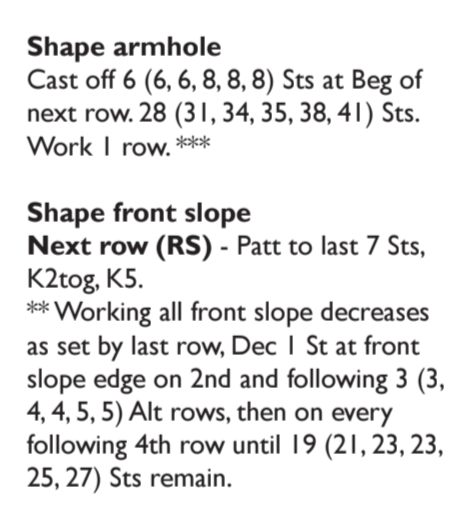
Does “Dec 1 st at front door edge on 2nd and following (5) Alt rows” mean I’ll be doing the decrease stitch from the right side first (as in the description of the decrease), then the wrong side (k5, k2tog, continue pattern), since it’s an uneven numbers of rows between decreases?
1 Like
Deleting it all, as I’m certain what I read this as is wrong, given the picture of the FO. This pattern is not clearly written imo. But looking at the photo, I think you are likely right.
1 Like
Shape front slope
Next row (RS) - Patt to last 7 Sts, K2tog, K5. this is row 1 in my count for this writeup
** Working all front slope decreases as set by last row, Dec 1 St at front slope edge on 2nd and following 3 (3, 4, 4, 5, 5) Alt rows, then on every following 4th row until 19 (21, 23, 23, 25, 27) Sts remain.
I think what they mean is
Row 2 (WS) row work in pattern
Row 3 (RS) decrease row this is 2nd ‘alternate’ row
Row 4 (WS) row work in pattern
Row 5 (RS) decrease row this is Following 1st ‘alternate’ row
Row 6 (WS) row work in pattern
Row 7 (RS) decrease row this is Following 2nd ‘alternate’ row
Row 8 (WS) row work in pattern
Row 9 (RS) decrease row this is Following 3rd ‘alternate’ row
Row 10 (WS) row work in pattern
Row 11 (RS) decrease row this is Following 4th ‘alternate’ row
Row 10 (WS) row work in pattern
Row 11 (RS) decrease row this is Following 5th ‘alternate’ row
Row 12 (WS) row work in pattern
and then you go to every 4th row decreases until you get the stitch count
3 Likes
This makes MUCH more sense! Thanks 
1 Like