I’ll do one or two rows of garlic in both of our community gardens, but one of them has a large dedicated garlic plot. We go to the planting and the pulling so we get a cut of that.
I put garlic near where I’m going to put the squash. By the time the squash really gets going, it’s time to pull the garlic.
I am still fighting the rust on my rose. I’ve hacked back very aggressively, even though it’s the wrong time of the year.
It certainly wasn’t helped by weeks of people cutting wood (high velocity sawdust) in the yard, which I think moved the spores around more, and then stuck on the leaves.
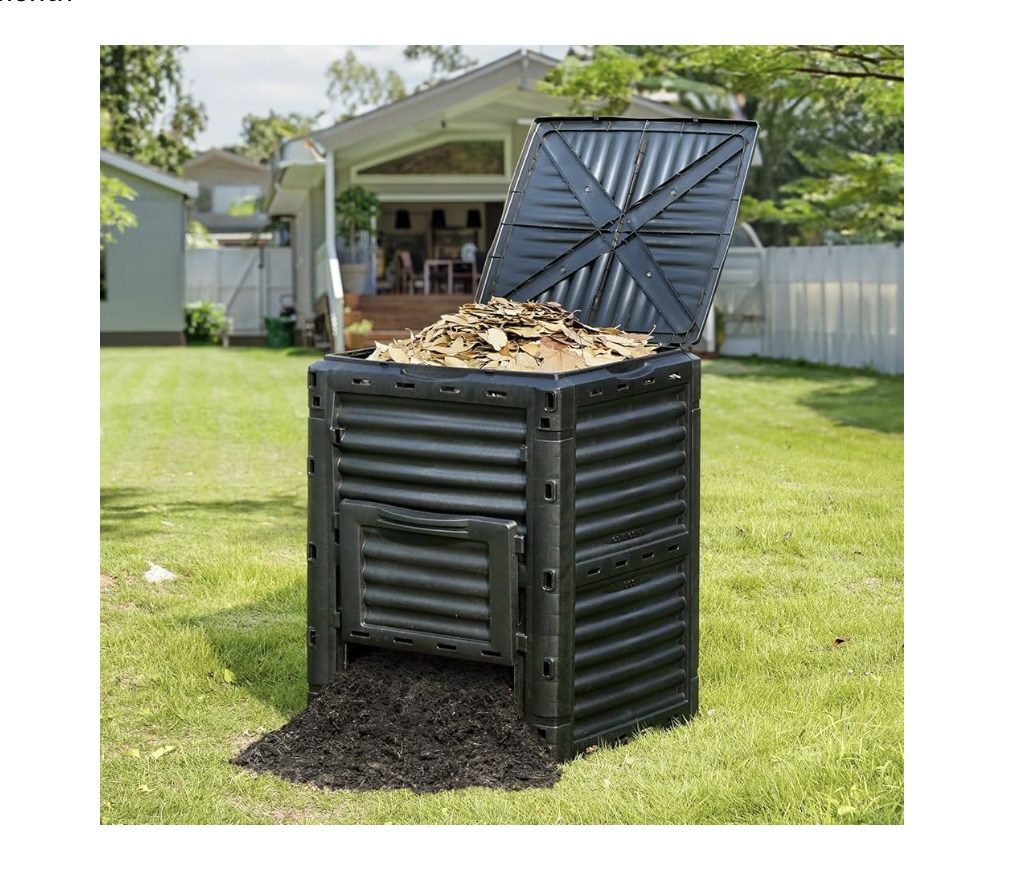
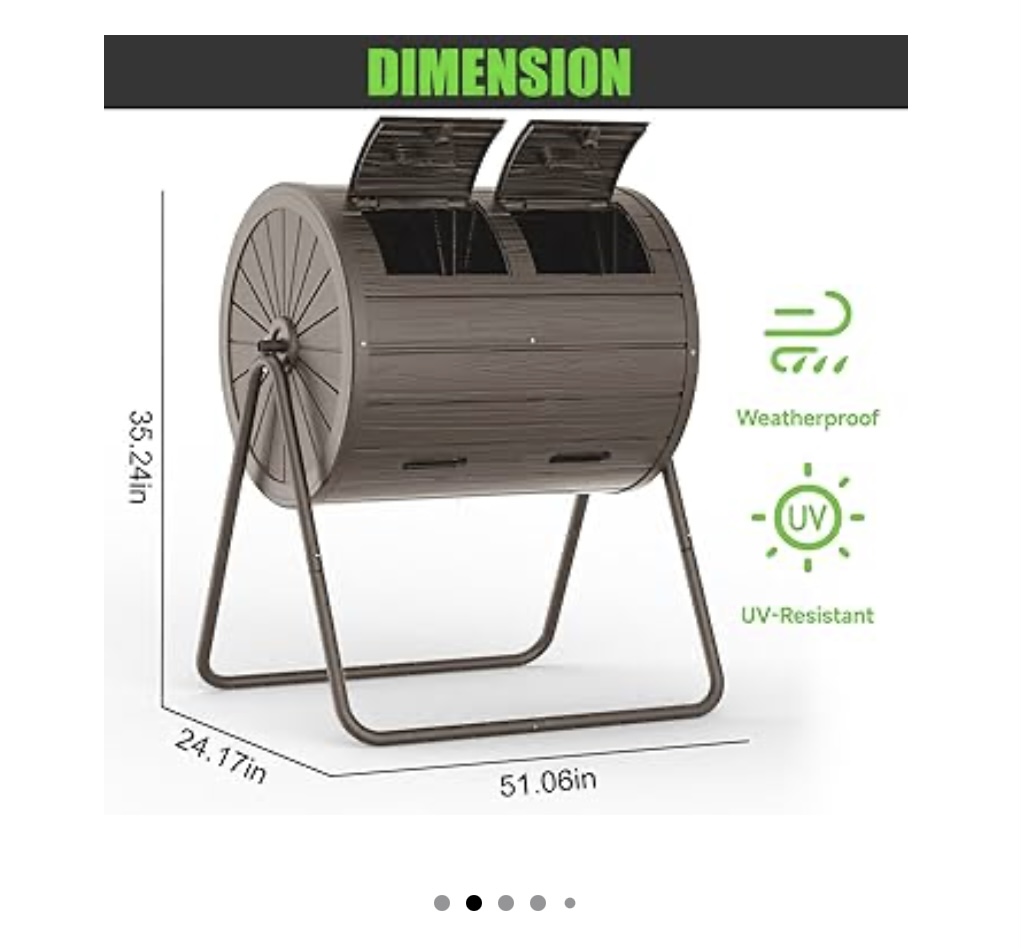
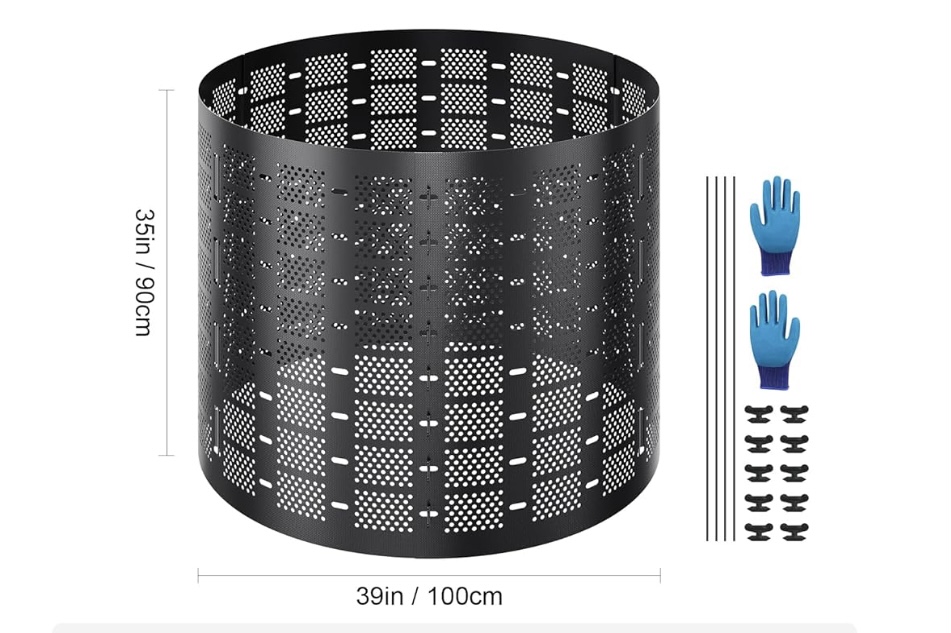
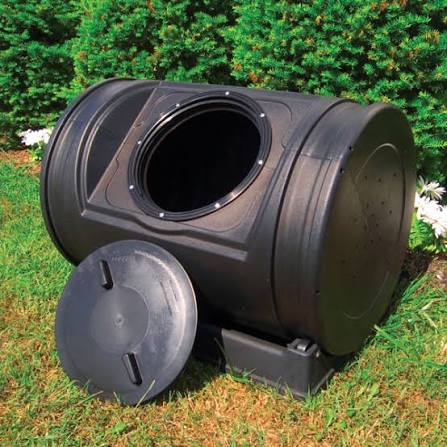
I’m thinking about getting a composter for my garden/yard waste but know nothing about it. I would buy a bin because I don’t have a place to build one. I found a couple of possible kinds, input is welcome.
I assume a tumbler would be better than a stationary one?
Does it need to be located in the sun? I’m not sure if I have a good spot for it.
Are food scraps AND yard waste both needed? Or can it be only yard waste?
I’m sure other people know more things but our tumbler is way too small for yard waste. Grass clippings alone would swamp it and the volume of leaves in the fall is like 10x the volume of the container
Our goal is more to break down yard waste (our city charges for bags) than caring a ton about getting lots of compost, so I very lazily turn mine about once a season or so. Ideally you have a mixture of greens (including food waste) and browns (leaves etc). If your ratio is wrong, it will still break down, it just will take more time and will be “cold” compost rather than hot. A disadvantage is that it won’t kill seed banks as well as hot compost. But it’s way easier to maintain! I personally think the cage type systems would be better than the smaller tumblers.
I have had both types–we got one of those tumbler things, and it just didn’t work for us. The stuff just turned into a wet, gross ball, maybe because it didn’t get much air? I’m not sure. Anyway now ours is basically an open-top bin and it’s much better. We do turn it but not that often–like one or two times a season.
I think more capacity is better too, even if you’re just one person, because if you’re collecting yard waste it is a lot.
You need a mixture of food waste and garden waste; yard waste on its own will not break down as fast.
I don’t think it’s super important that it’s in the sun. I think the best location would be a) not right next to your house, in case of pests and b) in a location that’s easy for you to walk out to and dump your kitchen waste every couple of days.
I’ve had a tumbler at home, and also at school, and I didn’t care for them. They are hard to turn, and they drip.
But also, if you keep adding stuff, it’s hard to get finished compost.
For just yard waste, we always had a separate heap. The wooden enclosures are good for that. You just turn the pile periodically.
For turning kitchen waste and leaves, the black plastic square ones are fine. Get one with a door at the bottom to pull the finished compost out. If you really want to make good compost, by the starter bacteria to get it going and a compost thermometer so you can tell if it’s hot enough.
I use a black dalek composter, and have mice wire underneath it. We’re in an urban suburban area and theres mice and rats so anything they can climb in is a bad idea, and this way close to the house is fine - i can have it right next to the house and its no problem. Bigger is better to a point, it does break down my stuff faster. Also mine is cold compost and I just keep adding to the top because the goal is breaking down my food and garden scraps, not the end compost, and my big one is continually breaking stuff down a heap.
Compostable Kate talks about a ton of different ways to achieve good compost for whatever method works for you:
It is extremely large (55 gallon drum size!), so it could probably handle some level of yard waste, but probably not all of it, especially large or woody material. It does turn relatively easily, but does get difficult when it’s full and heavy, I have to use my legs to help when it’s getting full. If I didn’t have this bin I would not be bothering with turning compost. It’s mostly rodent proof, though I have had to do a repair on the lid handle which I guess was enough of an angle for them to get their teeth into. I patched it with some hardware cloth and sugo and it’s been fine every since. I’m also southern USA, so i usually get a good crop of solder fly larvae, who are really good compost buddies for anything that’s typically difficult to compost. Ive been able to keep the bin from going anaerobic for the most part, but that is it’s tendency if you don’t keep an eye on it. I start mine about a third full of dry/browns, and then add food waste every week-ish. I try to turn it every time i add, to keep things covered and reduce attractiveness to rats, and if it seems wetish I add more dry material. I usually empty and sift about once a year, and don’t worry too much about incomplete compost. It’s mostly getting surface applied around perennials, so it doesn’t seem to be an issue. I have a small wire cage style situation that I use for grass clippings leaves etc that get used as the dry base for the next compost batch.
I think it largely depends on how much waste you’re adding and what type of composting you’re doing and what kind of material you’re adding and how much work you’re willing to put in? I’m a lazy composter who turns it once a week maximum and will not stop adding material for long enough for it to “” finish"" and only manages the green/brown ratio enough that it doesn’t get soggy/anerobic, and also I rely on a LOT of insect activity as opposed to microbial breakdown so it’s not getting super hot and I am not chopping anything into smaller pieces for quicker breakdown. But you could absolutely do hot/fast composting in this bin if you wanted to manage it that way! I get a pretty big volume of compost out each year, probably 1 or 2 5-gallon buckets after sieving out the big stuff that’s still breaking down, but I can’t really speak to it’s quality or finished-ness.
If you want a lot of compost, and fast, you can do the Berkeley method. Using this you can turn something like 3 cubic feet of yard waste (grass, plant material, leaves) into “finished” compost in something like 3 weeks(?) using hot composting (which also means you don’t lose any volume, and it theoretically will kill weed seeds and pathogens). I did it once. It worked. It was a huge amount of effort, like seriously, both in time spent and calories spent (by me, turning all that compost every single day (it might have been every other day? I don’t remember anymore, it was a lot though)) and required monitoring it for temperature and moisture level. A 3’x3’x3’ pile is bigger than you think it is. Will I do it again? Maybe, but not likely regularly, I just don’t have the time or calories to spare.
What I normally do is make a big pile in the back corner of the yard. I add to it all year. I maybe turn it a few times if I am very lucky. By next year I pull the “finished” compost out of the bottom of the pile and add whatever is left to the next pile for the new year. I don’t even use a containment system of any kind anymore. But I don’t live in suburbia, and the pile is pretty far from my house, so I don’t worry about attracting like rats or anything. It is zero effort. I am pretty keen on zero effort. Plant matter eventually breaks down anyway, so it’s quality-enough for me.
I always pulled out the bottom layer of finished compost in the fall and gave the rest a stir, and then pulled out a little more around June. I added leaves in the fall and shredded paper in the summer, but otherwise it was all kitchen waste minus meat and dairy. If you put in egg shells crumble them up because they don’t break down.
We use a compost service now, but I do take a few things to the garden compost.
It depends on how hardy the plants are. Eg. Things like summer squash, peppers, tomatoes will die if exposed to freezing temps, even often just for a few minutes. Other things like cole crops, lettuce, carrots, celery, are cold hardy, some extremely so. It sort of depends also on your microclimate, and for how long temps at or below 32, and if it will be windy.
Can you cover with tarps, sheets, towels, bins? in the past, I have used chairs set out with sheets or blankets drapes over or large upturned pots or black bins or totes over individual plants.
Eta: I protected my peppers and tomatoes and zucchini(!) from a low of 26 degrees last week successfully, it stayed just at or above freezing under the tarp (secured on all sides including the ground (with big rocks) so no freezing air could seep in). This week we had 2 nights of frost warnings and I covered again, but it ended up not quite getting below freezing in my garden. However, yesterday I could see frost on parts (but not all) of the grass of the field right next door.